
Nobody turned out in the training, why?
Namgyal Ghale
February 18, 2025
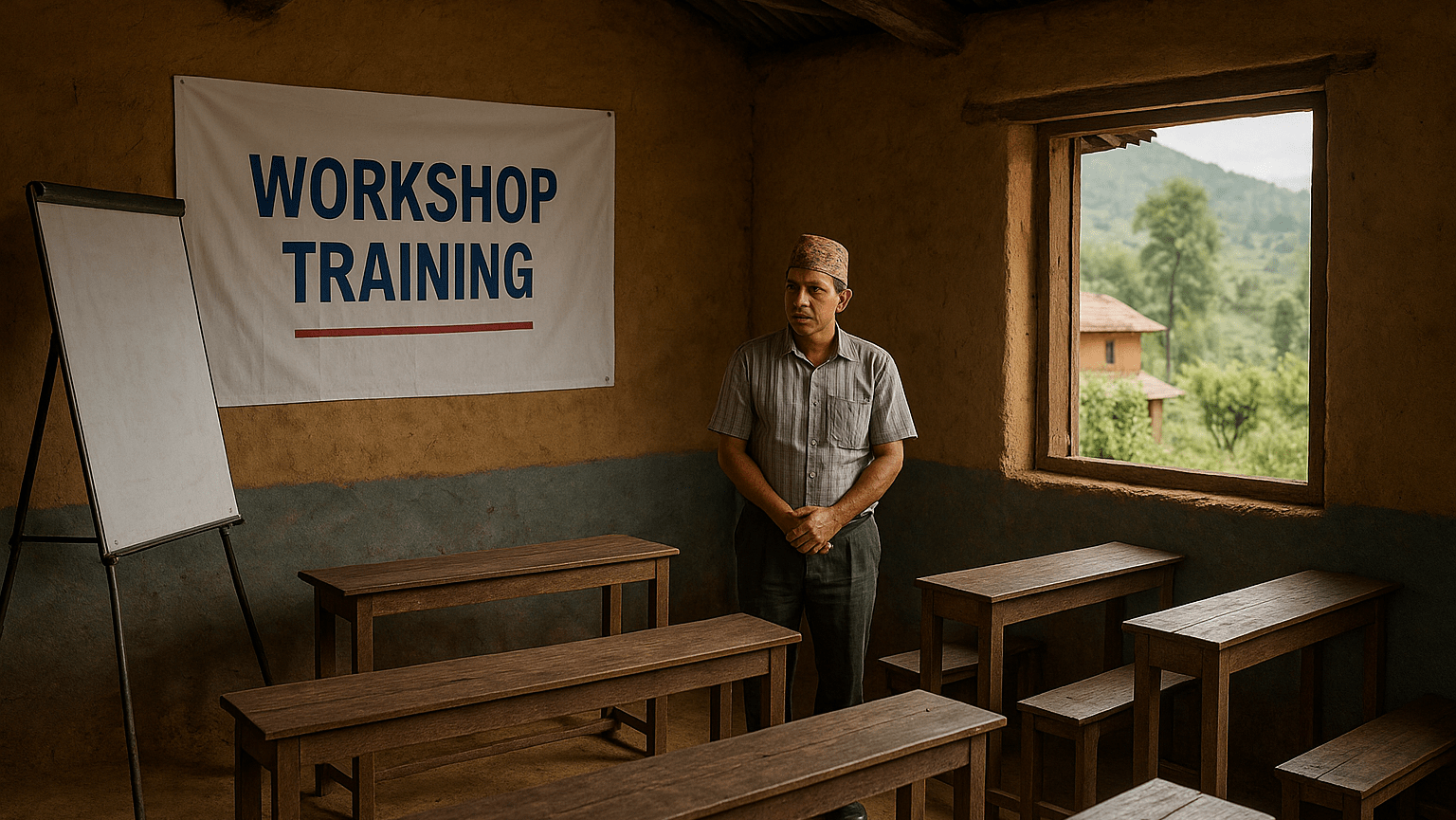
On a cold day in mid-January 2025, I, along with a financial literacy facilitator, traveled to one of our project schools in Lele to conduct a financial literacy training session for parents. Despite prior communication and information being shared by the school, no parents attended the training.
At Social Lab, we firmly believe that collaboration and coordination among all stakeholders are crucial for fostering ownership and sustainability. Through our flagship initiative, the School Support Program, we have been actively partnering with and supporting public schools on the outskirts of the Kathmandu Valley. Our efforts focus on innovative lifelong learning programs, recreational activities, mid-day meals, and capacity-building training.
As part of our capacity-building training component, we ensure the active involvement of parents, teachers, and local government to promote the holistic development of the educational landscape. Through prior consultations, we deliver essential training sessions within the school, covering a wide range of topics, including health, agriculture, and financial literacy.
For a moment, the absence of parents created an awkward situation for both the facilitator and me. The kitchen staff kindly offered us tea, which I sipped slowly, hoping to buy time in case a few parents arrived. I was prepared to proceed with the training even if only 10 parents showed up. However, after waiting for 45 minutes, we decided to leave the school as no one came.
As John Dewey once said, “We don’t learn from experience; we learn from reflecting on those experiences.” As a development practitioner, I was aware that such situations might arise while working with communities.
Before this financial literacy training, we had conducted three other sessions, each attended by more than 35 parents. These sessions covered topics such as breast cancer awareness, cervical cancer awareness, and agri-business training. Feedback collected during the mid-term review indicated that parents found the training valuable and necessary, and they expressed having learned a great deal. The reviews were overwhelmingly positive.
However, the fourth training saw no turnout. This moment served as a valuable lesson, prompting me to reflect on how we can better engage parents and ensure their participation in the future.
- The culture of providing financial allowances has undermined the essence of collaboration. At Social Lab, we expect parents to take ownership, especially since we have been supporting schools with resources and innovative programs.
- There is a need for empowerment, encouraging parents to actively involve and engage in school activities for the holistic development of their children and the community.
- However, there may be a lack of communication and connection between the Social Lab and the parents. It’s possible that we failed to effectively convey the importance of our work and how it directly benefits their children.
- Moving forward, we need to explore innovative ways to engage parents, perhaps by offering incentives that carry emotional value. For instance, in the past, I distributed group photos to all participants, which seemed to resonate with them.
- Many parents work as laborers to support their families, often at nearby soil crushers. Attending a three-hour training session could mean losing out on their daily wages, which is a tough situation to ignore.
- Additionally, we must be mindful of local festivals and cultural events when planning our activities. On the day of the financial literacy training, there was ‘Chewar’— a Tamang cultural ritual; which likely contributed to the low turnout.
What are your thoughts? Let’s share our perspectives and work together to transform the educational landscape of Nepal.
Ghale is a Project Officer at Social Lab and a passionate development practitioner.
No responses yet