Fixing Invisible Barriers to Education and Readiness (FIBER)
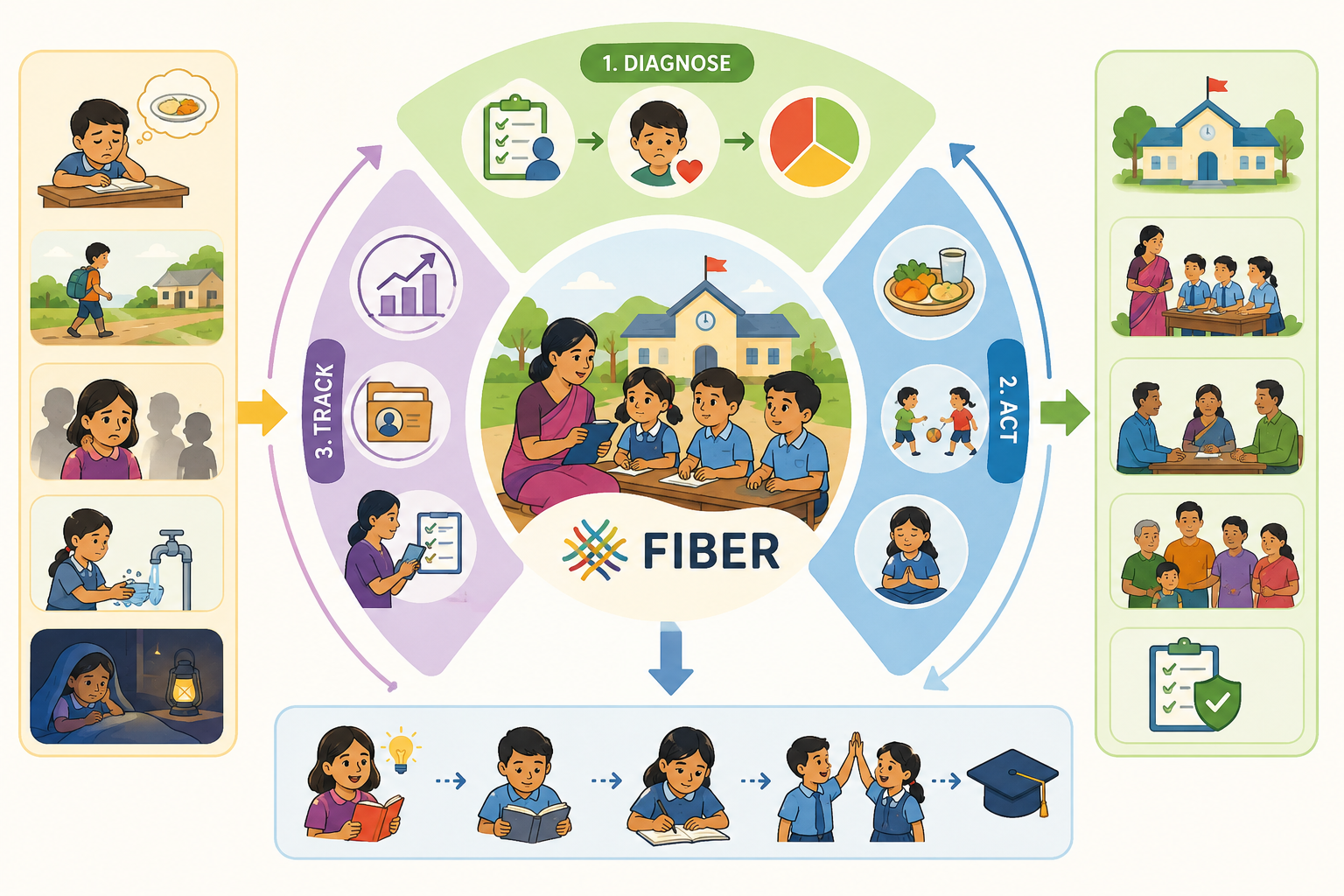
FIBER is a school-integrated learning readiness program that systematically identifies and actively addresses the non-academic, well-being-based barriers preventing children in remote Nepal from being cognitively and emotionally ready to learn; through teacher-led diagnostics, structured daily action systems, and continuous evidence tracking.
Social Lab Nepal, with support from Books for Change Switzerland, has piloted FIBER into 2 public schools across Bagmati Province in Nepal as an innovative intervention to navigate the complexities surrounding public schools that are affecting children’s participation in learning and readiness.
In remote public schools in Nepal, a substantial proportion of children in Grades 3–7 are physically present in classrooms but are not cognitively or emotionally ready to learn.
This learning-readiness gap, which is caused by poor nutrition, irregular attendance, emotional insecurity, and weak daily routines, is invisible to the school system because no structured tool exists to identify it, and no embedded intervention system exists to address it.
As a result, even well-intentioned improvements in teaching quality and curriculum have limited impact.
The concept of students who are physically present but cognitively disengaged is captured in work on “cognitive class avoidance,” which defines students who are in class but mentally absent and develops a scale to measure this invisible inattention.
Implementation Model
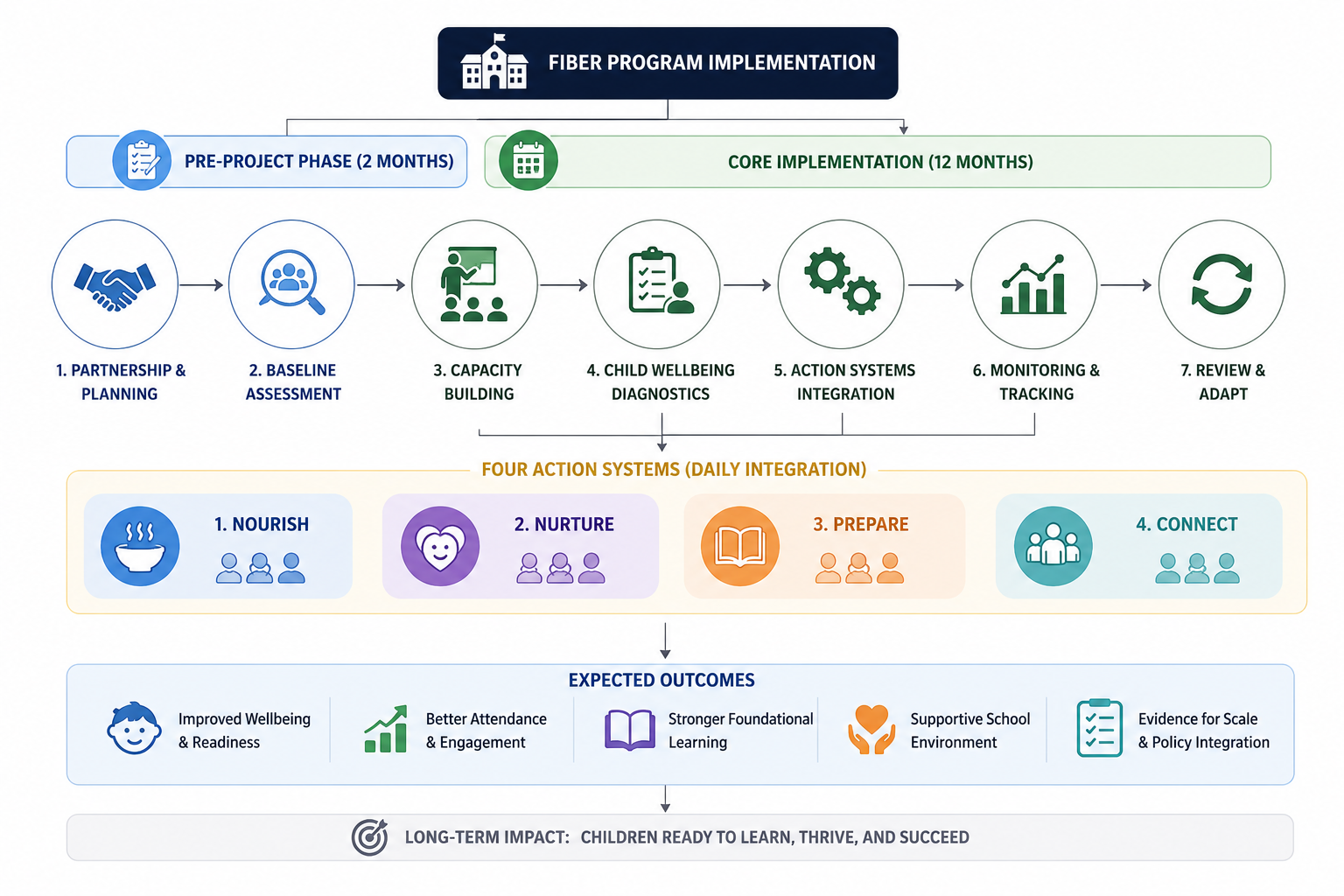
FIBER follows a simple Diagnose → Act → Track approach to identify and address hidden barriers that prevent children from being ready to learn.
The implementation begins with school selection, stakeholder engagement, teacher training, and the establishment of the Child Wellbeing Diagnostics (CWD) system. Teachers then regularly assess students’ learning readiness across four areas: physical wellbeing, daily routines, emotional wellbeing, and learning engagement.
Based on diagnostic findings, four integrated action systems are implemented within daily school routines: improving learning readiness, strengthening participation and confidence, creating safe learning environments, and engaging families and communities. These interventions are embedded into normal classroom practices rather than delivered as separate activities.
Progress is continuously monitored through teacher observations, attendance records, participation tracking, and well-being indicators.
The data is reviewed regularly to adapt interventions, support vulnerable children, and strengthen school ownership. Over time, responsibility gradually shifts from project staff to teachers, school leadership, and local governments, creating a sustainable model that improves student wellbeing, attendance, engagement, and overall learning readiness while generating evidence for wider replication and policy integration.